
Can Medical ID Tags for Dogs Help Sitters and Groomers Handle Special Needs?
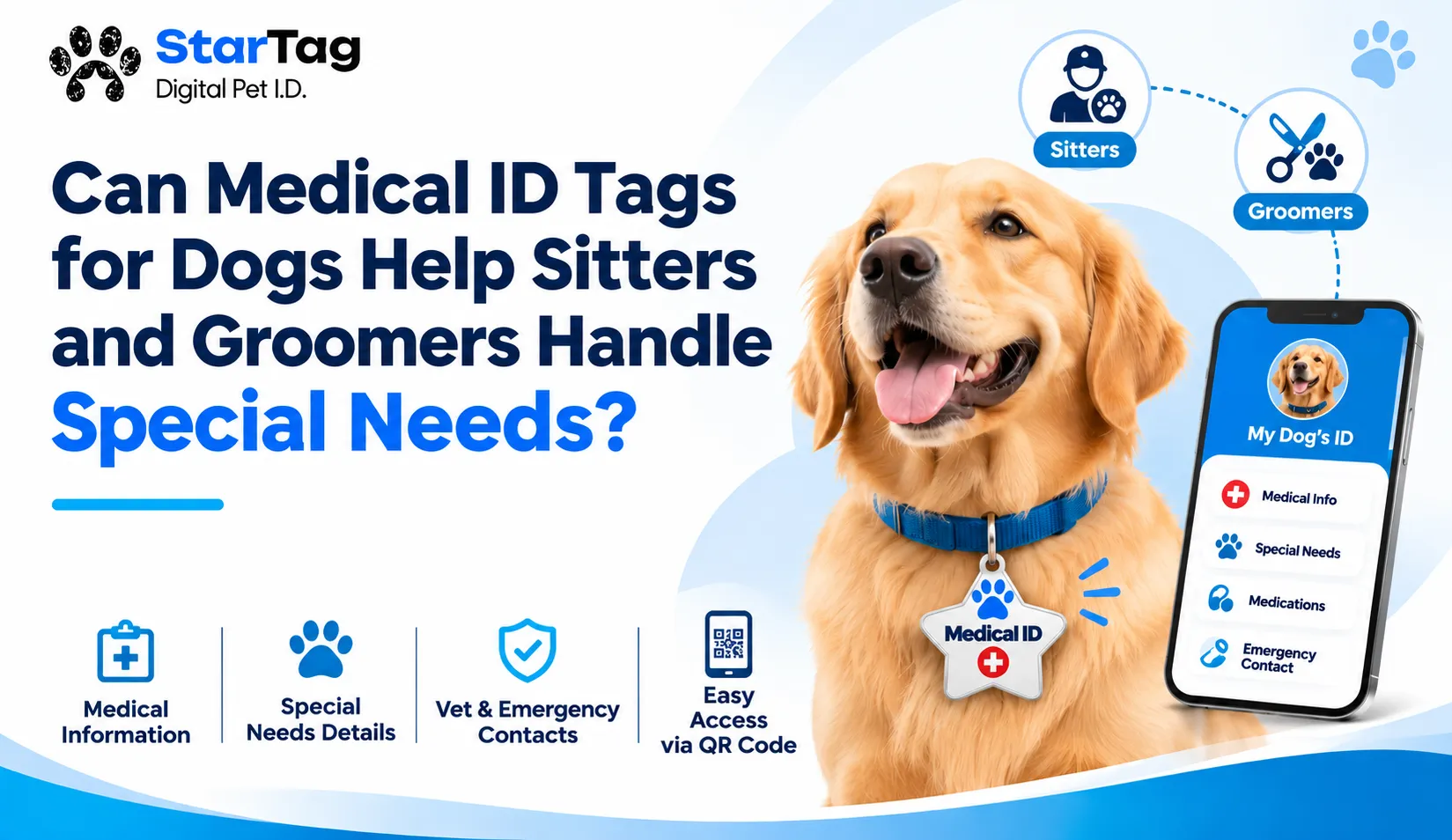
You can explain your dog's needs to a trusted sitter at length. But what about the groomer's new assistant, the weekend dog walker, or a neighbour who steps in at the last minute? Information gets lost, and with a dog that has a medical condition or special handling needs, a small gap can matter. That is where medical ID tags for dogs can help. A tag that clearly signals an important condition, or links to detailed notes, gives anyone caring for your dog a reliable first reference. This guide explains how medical ID dog tags work in everyday care, what to include, and how to share the right information without oversharing. Special needs are not only serious illnesses. Anything that changes how your dog should be handled or fed can be worth flagging. Allergies: to foods, medications, shampoos, or insect bites Chronic conditions: such as diabetes, epilepsy, heart disease, or kidney problems Medication schedules: especially time-sensitive doses Mobility issues: arthritis, joint pain, or recovery after surgery Sensory differences: deafness, poor eyesight, or sensitivity to touch Breathing or heat sensitivity: common in flat-faced breeds Behavioural needs: fear of noise, reactivity, or discomfort with handling Skin or coat sensitivities: relevant to groomers If something would change how you care for your dog, a sitter or groomer needs to know. Sitters often care for your dog in unfamiliar situations, and they may not know the early warning signs of a problem. A medical ID tag can help by: Showing medication or feeding notes at a glance Giving emergency contacts, including your vet Helping a substitute or neighbour act quickly if you cannot be reached Groomers handle dogs closely, sometimes in stressful settings, and small details change how they work. Allergy and skin notes help them choose appropriate products. Mobility limits help them avoid positions that cause pain. Noise or touch sensitivity helps them adjust equipment and pace. Medical conditions, such as seizures or heart problems, tell them when to be cautious and when to stop. A clear tag supports good communication, though you should still brief the groomer directly. A metal tag has very little space. Trying to fit a full medical history on it leads to cluttered, unreadable text. This is where a QR tag works well. A short alert on the tag points to a profile with more detail. A scannable profile can carry: Conditions and diagnoses in plain language Medication names, doses, and times Allergies and foods to avoid Handling notes and calming tips Your vet's details Several emergency contacts You can update it as your dog's needs change, without replacing the tag. List your dog's medical and handling needs. Ask your vet which details are most important for others to know. Create a clear profile with plain language and no jargon. Test the scan to be sure it opens correctly. Brief your sitters and groomers, and show them where to find the information. Review every few months and after any health change. A tag is visible to anyone, so avoid putting sensitive details in public view. A better approach: Public level: name, brief alert, and a way to contact you Detailed level: health notes shared through a protected link or profile Handover level: a written care sheet for regular sitters and groomers Check how any platform handles privacy before using it. Relying on the tag alone. Always brief caregivers directly, as the tag supports communication but does not replace it. Using vague wording. "Needs care" tells nobody what to do. Overloading the tag. Too much text is hard to read. Forgetting to update. Out-of-date medication details can cause harm. Sharing everything publicly. Keep sensitive details protected. Yes, medical ID tags for dogs can help sitters and groomers handle special needs, especially when a short alert is combined with a scannable profile that holds the details. Keep the tag simple, keep the information current, and always brief the people caring for your dog. If you want to add a clear, scannable layer to your dog's identification, you can explore tags from StarTag. This article is general information and does not replace advice from your veterinarian.What Counts as a Special Need?
How a Medical ID Tag Helps Sitters
How It Helps Groomers
The Limits of a Physical Tag
A Simple Setup Plan
Privacy: Share What Is Needed, Not Everything
Common Mistakes to Avoid
The Takeaway