
How Pet Medical Records Online Help You Avoid Repeat Vaccinations and Costly Tests
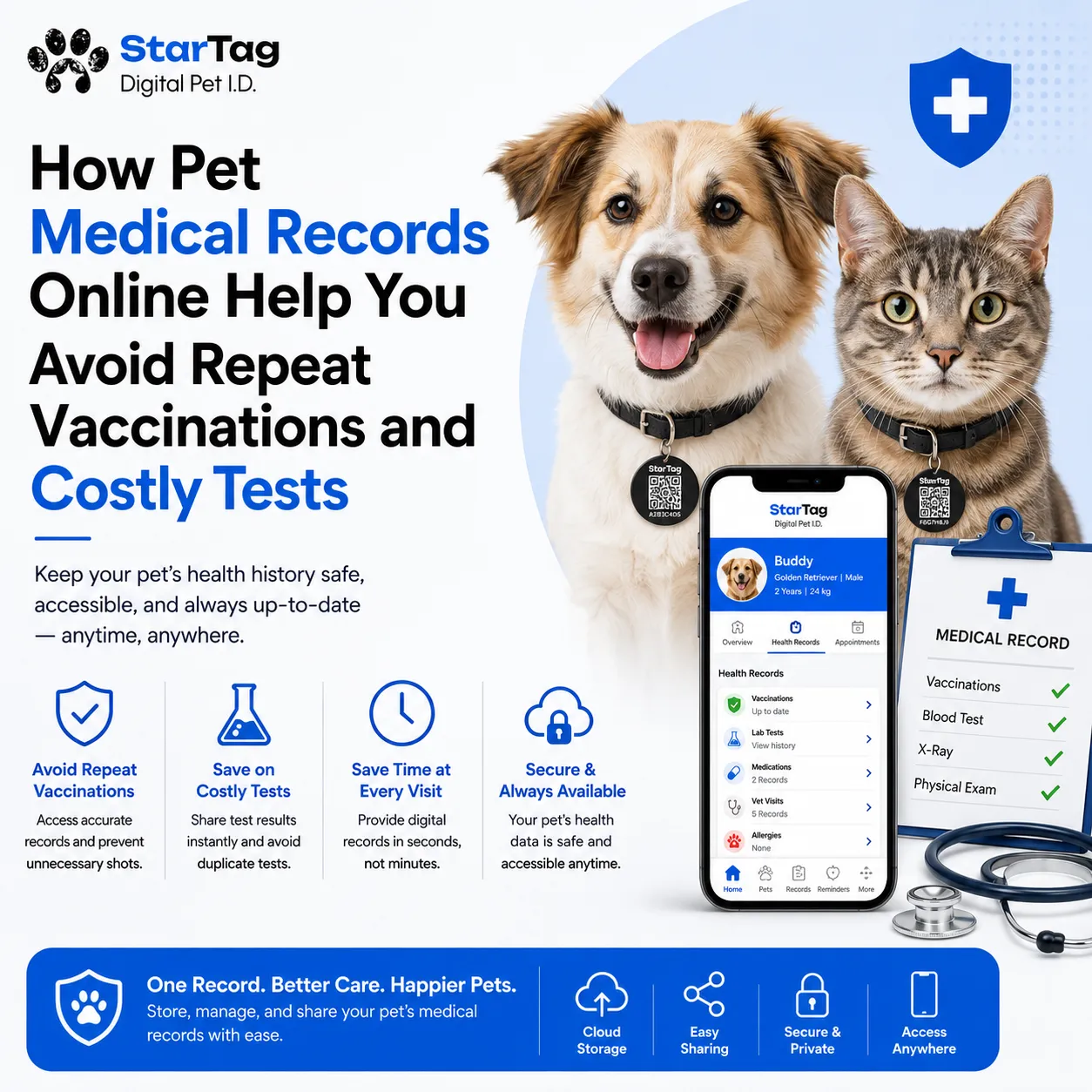
The dog receives a rabies vaccination in a new vet clinic since all the documentation from the former vet did not make it through. Cats get a complete bloodwork test twice over three months, because two clinics were unable to find out what other practices had previously tested. Both cases are not unusual edge cases. The default result is any when a pet's medical history is only available on paper in a single clinic's isolated medical system. The online pet health record helps solve the problem of keeping every vaccine date, laboratory test result, and treatment record all in one location that can travel alongside the pet, rather than being locked in one vet's file cabinet. If pet medical records online are created properly, each new vet, groomer, salon, or emergency vet will pull from the exact same record instead of beginning from an empty file, and then re-running tests for security. This article will explain precisely how the system operates in a step-by-step manner, as well as how you can create it in a way that is actually working as it is supposed to. A majority of animals accumulate their medical records in a variety of different places, including a primary veterinarian and an emergency vet that is visited once and a groomer who requires evidence of vaccination as well as a boarding place that has its own intake form. Each of these facilities usually has its personal paper files or an individual digital record that is not synced elsewhere. If a pet is referred to an unfamiliar vet, the service does not have direct access to any of the remaining three. To avoid treating an animal that is not vaccination-free or has missed any drug interactions, the clinic will default to repeating the vaccination or test. Take a look at the cost over an animal's life, and the cost of repeat visits can quickly add up, typically when procedures were completed correctly many months ago. The online health records for pets can be created by linking each medical incident to the pet's account and not to a specific practice's own internal systems. Every vaccination, laboratory result, or prescription note is recorded with the date as well as the practitioner's name. It is stored in a format that any licensed vet is able to access via the shared link, QR code, or user account controlled by the owner. The default behaviour is changed during a visit. Instead of the vet asking "do you have proof of the rabies vaccine," they simply open the file and can see the precise date, the administering clinic, and time, then move to the main reason for the appointment. It is the only source that every doctor checks, instead of a paper document that one has to carry, scan, or send. The real value of a digital recorder depends on the degree to which the system is kept. Make sure you follow this procedure when making a record system When adding new entries to your database, you must request complete records from each clinic that treated the pet in the past, and from any previous veterinarian if the animal was adopted or moved. A majority of vet practices provide the records in scanned or digital format upon demand, which eliminates any gaps that could make a new vet make a guess or test again. The records of vaccinations should contain the exact date of administration and the specific type of vaccine, along with the batch or lot number, if there is one. It is crucial to include this information as boosters will be scheduled according to the exact expiration times rather than approximate ones, and even a unspecific "vaccinated sometime last year" record still requires a careful vet to take a second test or give another dose. An official note that reads "bloodwork normal" isn't enough for new vets to work from. Bring in the actual report or image file so that future providers can check the results with a true baseline instead of repeating an entire panel in order to determine one. Set up the record to ensure it is shared immediately by way of a link or code instead of requiring the exchange of passwords and logins in the event of an emergency. The best systems to work in times of stress are those which do not require owners to remember passwords while the pet is being cared for. What makes the work last is to update the records immediately following each visit, not just weeks later. An account that's 6 months old gives the same false assurance like a blank record because a doctor cannot know the gap between what's been missed and what wasn't done until now. It is a one-time configuration. One record that is never updated is from the sync in one vaccination cycle. The storage of only summaries is not as efficient as the original documents. The summaries do not include the information that a vet requires to prevent re-testing. Limiting access to too much. Records that are secured behind a login that only the owner has access to is not a good idea during an emergency situation where the owner might not be available or accessible. Skipping non-vaccine history. Reactions to medication, allergies or previous procedures are as important in the same way as the dates of vaccination to avoid unnecessary or dangerous testing. Take a look at a pet who moves between primary and a boarding establishment twice per year, or one visit in an emergency after having eaten something that shouldn't be eaten. When a pet's online record is properly kept on file, the emergency vet instantly checks the pet's present medications, allergies, and the current blood tests, as well as eliminates interactions and repeat tests within a few moments, instead of conducting an entire diagnostic test beginning from scratch. The single point of access can transform a stressful and costly trip into an efficient, safe one. The system functions because it records every vaccination date along with the lab test results, as well as the treatment notes in one spot that every healthcare provider is able to check and then decide to use an extra test or booster to avoid the fear of. Combine existing records, record specific details, and keep your record up to date after each appointment, so that the unnecessary expenses that result from papers that are not properly organized disappear. StarTag creates exactly this type of pet record that is centralized, providing pet owners with a single online profile that every groomer, vet or even a pet boarding service is able to pull up on the right.How a Paper-Based System Creates Duplicate Costs

How a Centralized Digital Record Actually Functions

How to Set Up Pet Medical Records Online Correctly

1. Consolidate Every Existing Record First
2. Log Vaccinations With Exact Dates and Batch Numbers
3. Attach Lab and Imaging Results, Not Just Summaries
4. Set Sharing Access Before It's Needed
5. Update the Record at the Point of Care
Common Mistakes That Undermine an Online Pet Record System
What This Looks Like in Practice

Final Thoughts