
Why Shelters and Vets Now Recommend QR Tags Alongside Microchipping
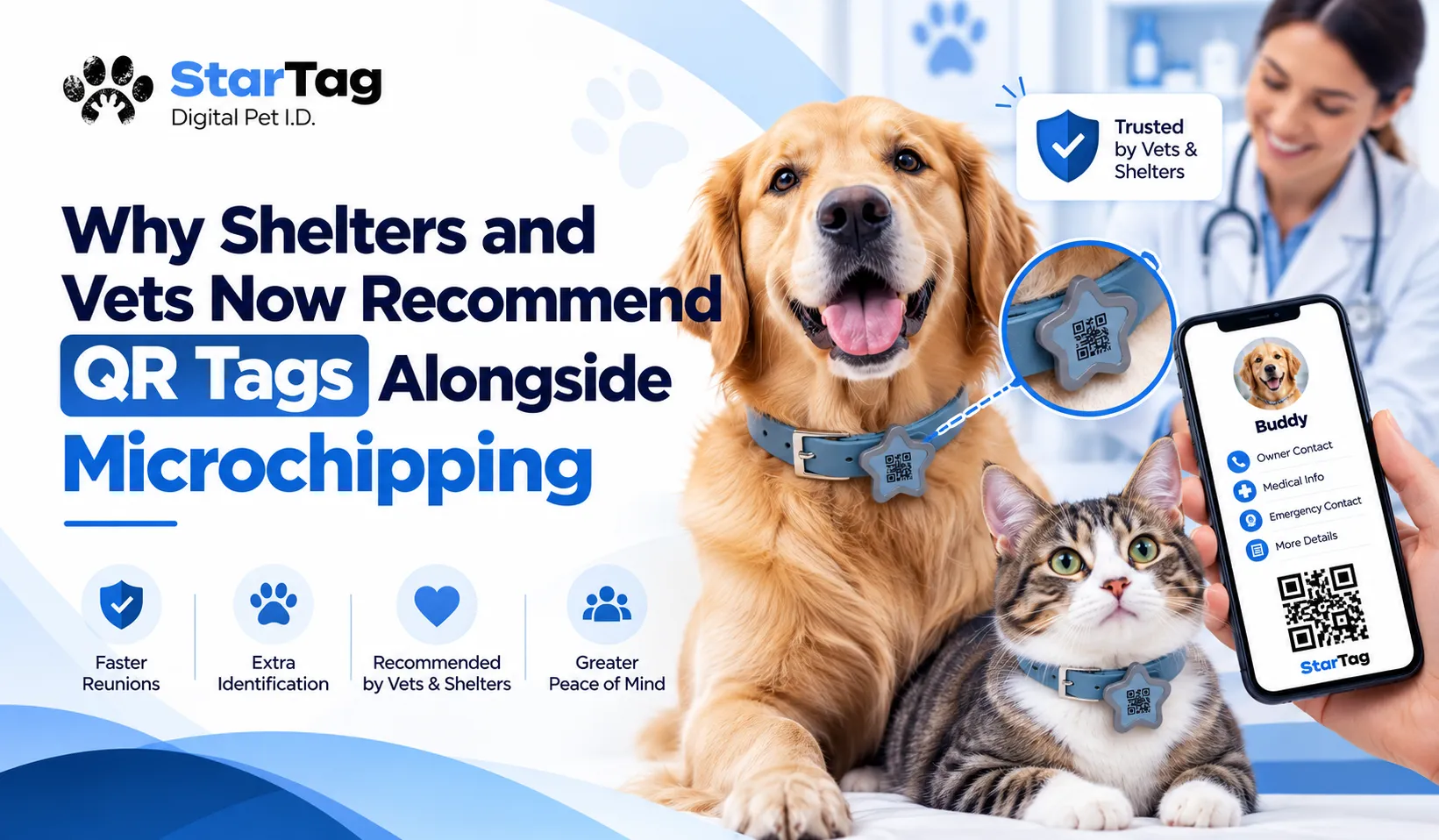
Microchipping is a sensible step for any dog owner, and vets who offer it are right to encourage it. But in India, a chip alone has practical limits that many owners only discover when their dog goes missing. Readers are hard to find, and there is no single database that every chip can be checked against. That is why a dog tag with QR code is increasingly recommended as the quick-contact layer that sits alongside a microchip, not instead of it. This article explains what each tool does well, where each falls short in the Indian context, and how to set them up so they cover for each other. A microchip is a tiny implant, roughly the size of a grain of rice, that stores an identification number. It cannot be lost, chewed off, or slipped out of a collar, and that permanence is its real strength. The difficulty is access. A chip can only be read with a scanner, and in India microchip readers are not easily found at shelters and at every vet clinic. Only select private vets have access to them. So if a kind stranger finds your dog, there is a good chance the first shelter or neighbourhood clinic they reach cannot read the chip at all. They would need to find one of the few places that can, which can take hours or days. Even when a reader is available, the next step is matching the number to an owner. India does not have a central registry of microchipped pets. A chip can usually only be identified through the registry that registered it in its own database. In practice, this means a scanner can show a number that the person holding it cannot trace, because it belongs to a company or registry they have no access to. The chip works only if the finder reaches the right reader and the right registry. That is a lot of steps between "someone found my dog" and "my dog is home". A QR tag turns any smartphone into a reader. The finder points their camera at the code, a link opens, and they can contact you straight away. There is no special equipment, no search for a clinic, and no registry to identify. QR tags can be scanned and read by anyone. Speed matters here. A frightened dog may keep moving, and a finder who can reach you in two minutes is far more likely to stay with the dog than one who must go looking for a scanner. A good QR profile can also show what a chip never will: your dog's name, a clear photo, medical needs, or a note such as "nervous with strangers, please speak softly." Imagine your dog slips out during a delivery and is found three streets away by a passer-by. With only a chip: the finder must locate a clinic or shelter with a reader, then hope the number can be traced to a registry that has your current details. With only an old engraved tag: the number may be worn, outdated, or unreadable. With a QR tag and a chip: the finder scans the code and messages you in minutes. If the collar is ever lost, the chip remains as the permanent backup. Not every QR tag is built to the same standard. Before buying, check these points: Durable code: laser-etched or engraved codes survive scratches better than printed stickers. No-login scanning: finders should not need to create an account to reach you. Privacy: look for systems that route messages through the platform rather than printing your home address on the tag. Editable profile: you should be able to change contact details without buying a new tag. Instant alerts: confirm you will be notified when the tag is scanned. Safe attachment: use a breakaway or well-fitted collar and keep the tag flat and close to the collar so it does not snag. Attach the tag securely to your dog's everyday collar. Complete the profile with a recent photo, your preferred contact method, and a backup contact. Scan the tag yourself to confirm it opens correctly. If your dog is microchipped, note which registry holds the record and confirm your details with them. Set a reminder every six months to recheck both records. Assuming the chip is enough. It is a good permanent backup, but it does not help a finder who cannot reach a reader or the right registry. Forgetting which registry holds the chip record. Without that information, even you may struggle to update or use it. Skipping the test scan. A code that has never been scanned is a code you are trusting on faith. Choosing a tag on looks alone. A stylish tag that fades or snags is worse than a plain one that works. A microchip protects your dog for life, but in India it depends on scarce readers and registries that are not connected to each other. A QR tag fills that gap because anyone with a phone can scan it. Use both: keep your chip details current, and add a scannable tag to your dog's collar this week. If you are ready to add the quick-contact layer, StarTag makes scannable dog tags designed to sit alongside a microchip, so whoever finds your dog can reach you in a single scan.
A Microchip Is Permanent, but Reading It Is Not Easy in India

No Central Registry Means a Chip Is Not Universal
What a QR Tag Does That a Chip Cannot

A Quick Scenario Shows the Difference
How to Choose a Dog Tag With QR Code That Lasts

A Ten-Minute Setup Plan
Common Mistakes to Avoid
The Takeaway